Blog
Guides & How-Tos
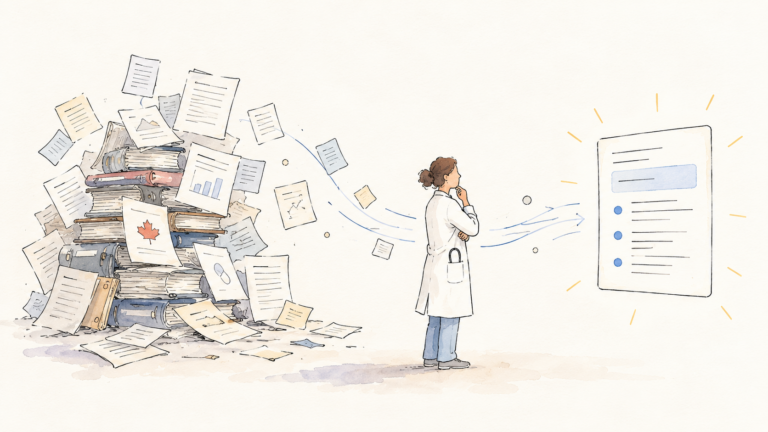
We read a lot of Asklepius test answers, and some of the most instructive are accurate but less useful than they should be. The dose is right, the guideline is the current Canadian one, the reference is real. But a physician answering the same question would have led with a different point, cut two paragraphs, […]
Guides & How-Tos
*Part 4 of our series on how clinical AI actually works. So far: a frozen formula with no database inside, trained by a self-marking guessing game that never checks facts (Part 3). This post tackles the behaviour clinicians ask us about most.* Ask a chatbot the same clinical question twice and you get two different […]
Guides & How-Tos
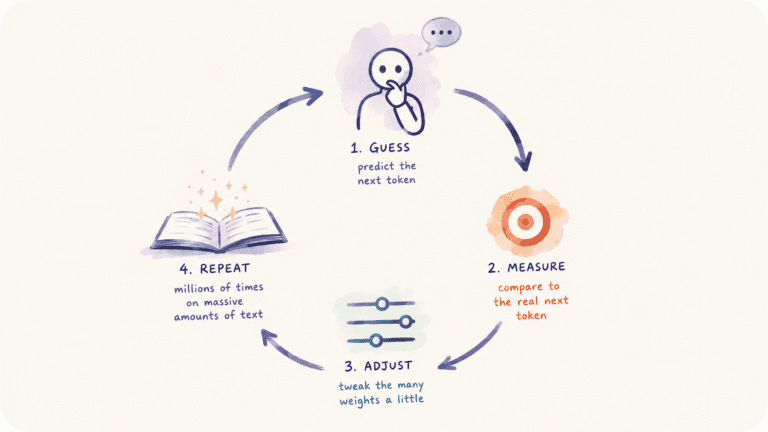
*Part 3 of our series on how clinical AI actually works. Part 2, It doesn’t look anything up, established that a language model is a frozen formula with no database inside. This post is about where the formula’s five hundred billion numbers came from — and the absence at the centre of the process.* When […]
Guides & How-Tos
*Part 2 of our series on how clinical AI actually works. Part 1, The Body Part That Didn’t Exist, told the story of a medical AI inventing a brain structure. This post starts correcting the mental model that makes stories like that surprising.* Most clinicians, when they picture what happens after they ask an AI […]
Guides & How-Tos
*First in a series adapting our CME talk, “Demystifying AI for Clinicians,” into written form. The series is AI education for clinicians — how these systems actually work, where they fail, and what to ask before trusting one.* In May 2024, Google published the research paper introducing Med-Gemini, its flagship medical AI. It was a […]
Guides & How-Tos
There’s been a lot of research published on clinical AI this summer, and it’s worth talking about. In June, a Nature Medicine study compared general-purpose language models against dedicated clinical AI tools — OpenEvidence, UpToDate Expert AI — and found that the general-purpose models outperformed them across medical knowledge benchmarks and real physician queries. Weeks […]
Guides & How-Tos
If you follow clinical AI right now, you’ve seen the race. Every few weeks a new comparison: which model retrieves guidelines faster, which one synthesizes the literature better, which one cites more sources. The benchmarks keep improving, and honestly, the results are impressive. Ask a well-formed question and within seconds you have prescribing information, guideline […]
Guides & How-Tos
Every physician in Canada knows the CPS. The Compendium of Pharmaceutical Specialties has been the definitive drug reference in this country for decades. It’s the big blue book that sits on the shelf in every clinic, every pharmacy, every residency program. If you trained in Canada, you learned to trust it. Drug Mode is built […]
Guides & How-Tos
Most physicians have tried ChatGPT for a clinical question. The answer sounded confident, cited nothing, and may or may not have reflected Canadian practice. Why we built Asklepius differently.
Guides & How-Tos
Virtual Hallway’s ‘Notes’ Simplifies Your Clinical Documentation In a clinician’s day packed with patient consultations, impromptu discussions with colleagues, and countless phone calls, the challenge isn’t just about capturing patient encounter details—it’s about efficiently documenting the myriad of interactions that inform patient care. That’s where the “Notes” feature in the Virtual Hallway mobile app comes […]